

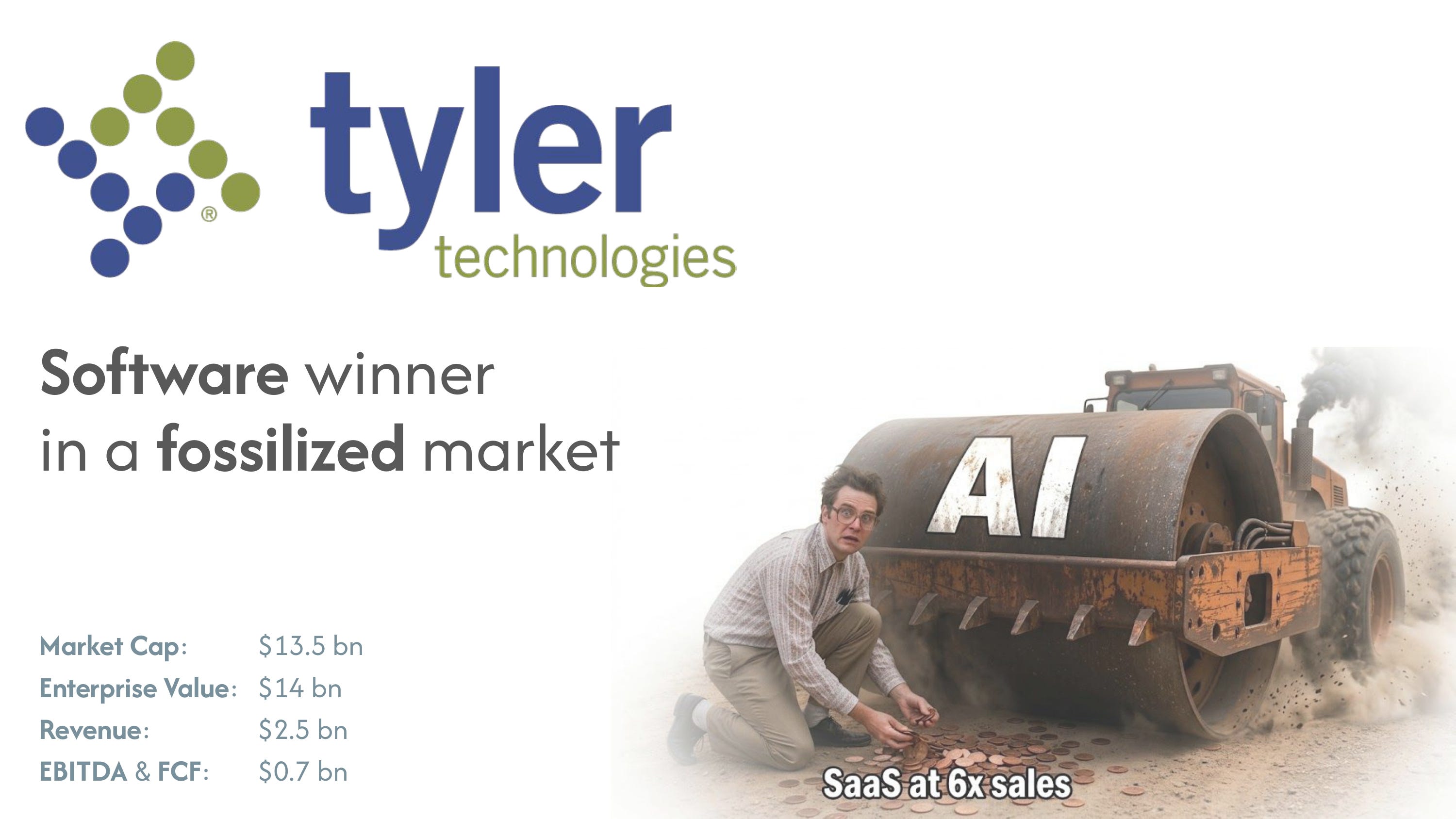
I have recently presented a pitch on Tyler Technologies. It is basically a rehash of its annual report, investor presentation and Doug Ott’s great overview.
So, does a software business make sense in the age of AI disruption?
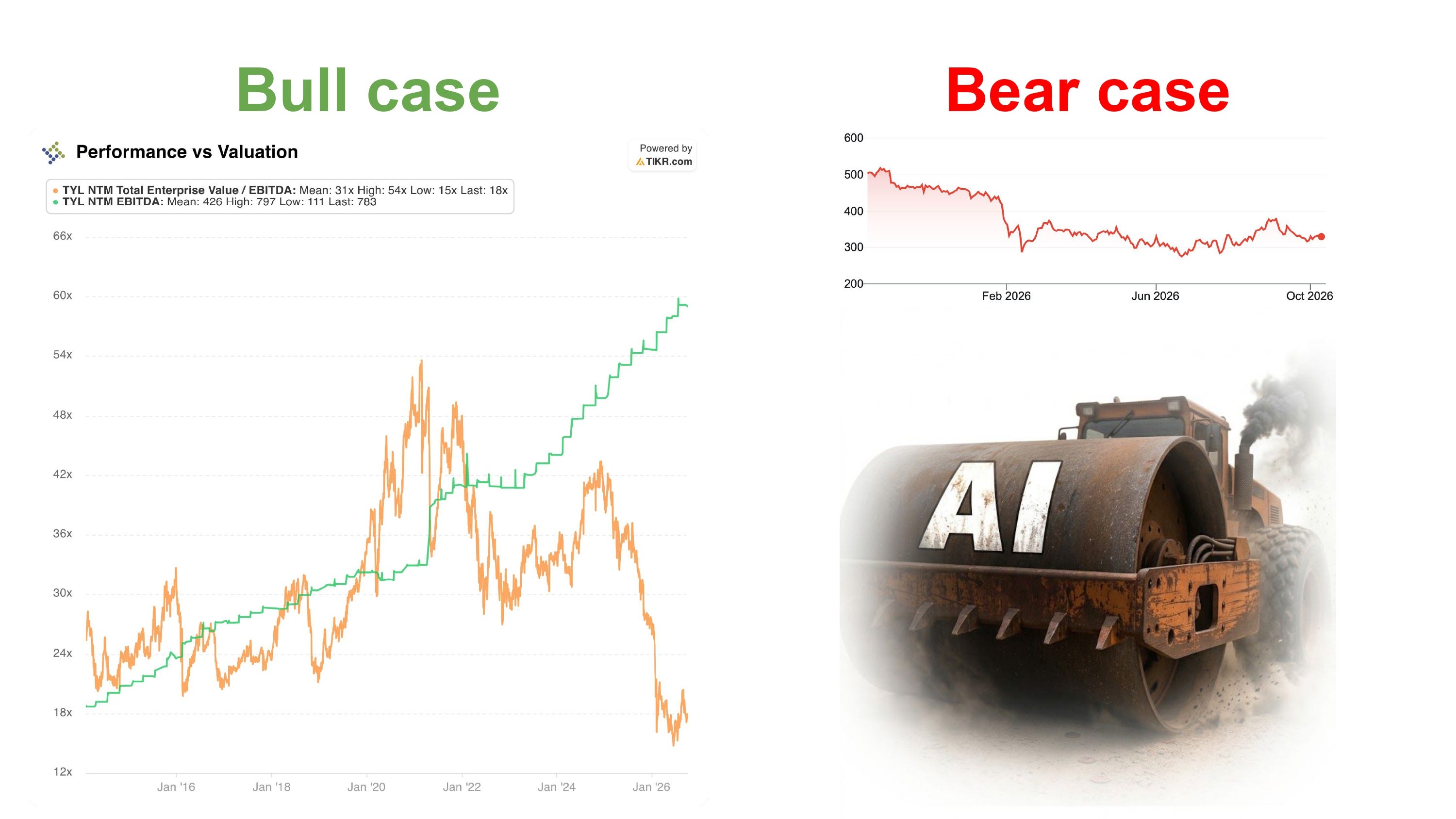
The bull case looks simple: Steady profit growth against a tumbling valuation.
The bear case is also hard to miss: Legacy software vendor with a still lofty valuation against the incoming tide of generative AI and a stock market that is increasingly aware of that risk.
Let’s start with what Tyler actually does.
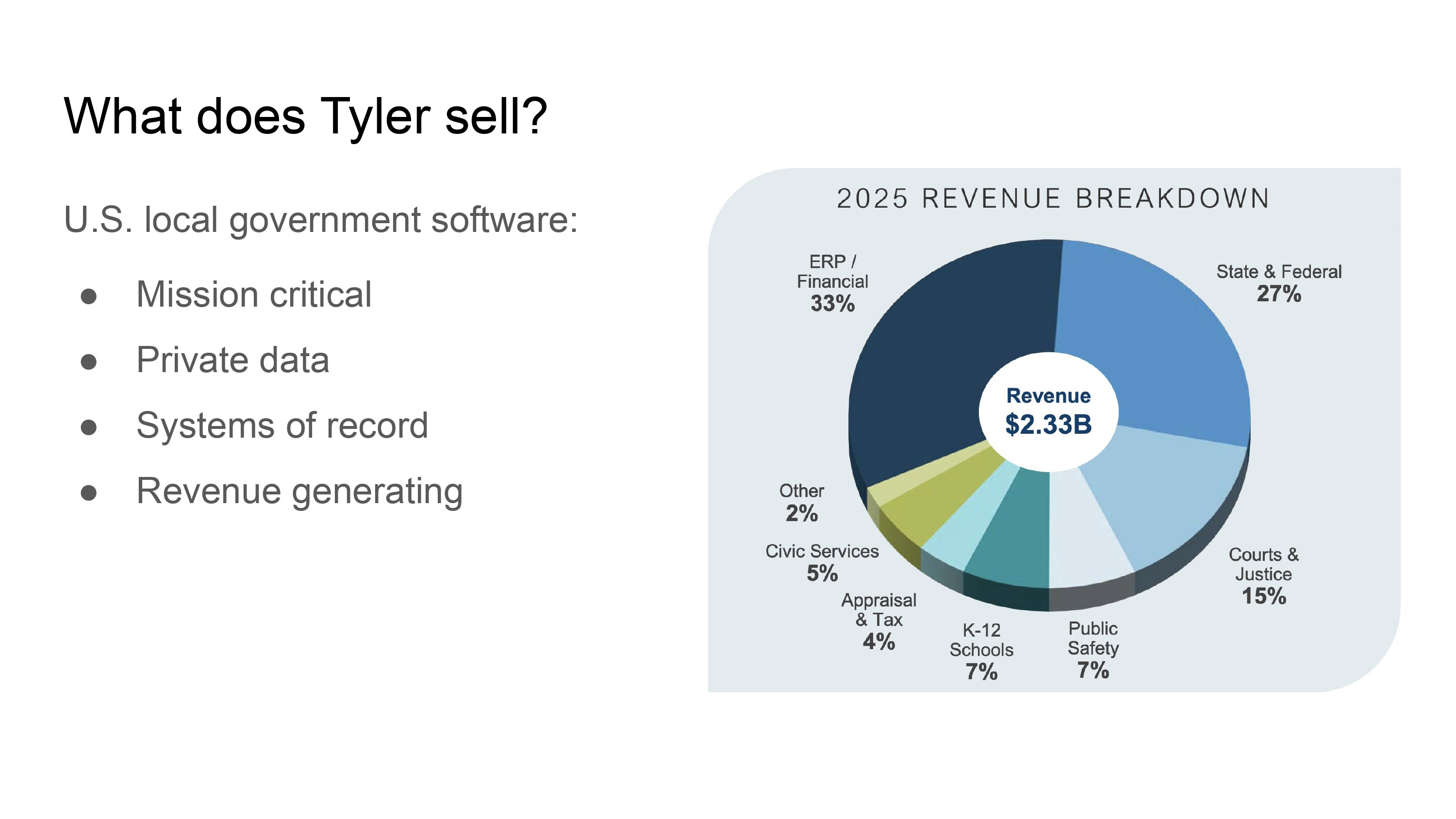
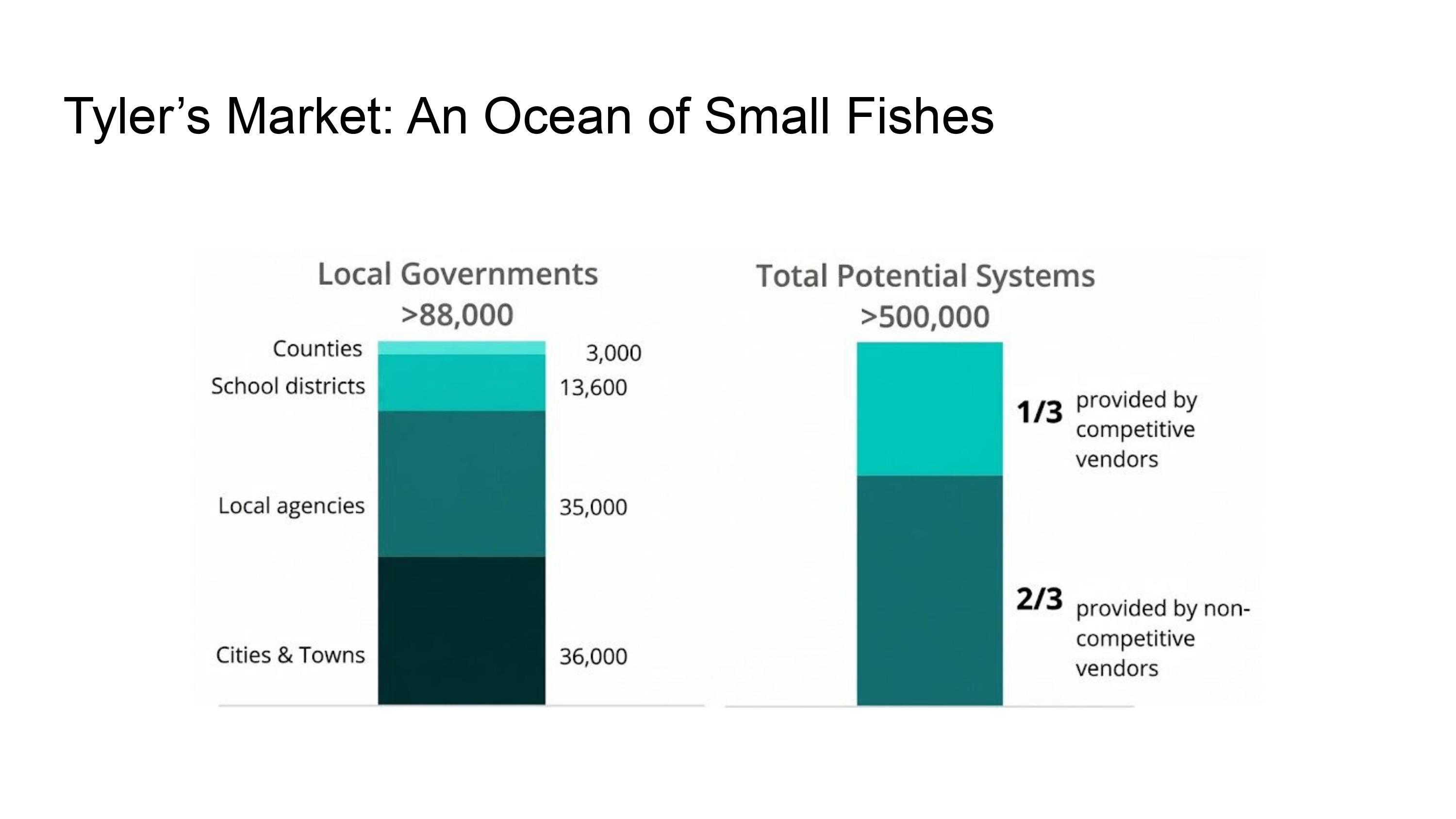
Tyler sells software solutions to local government entities in the US.
Thanks to the hyper-localized system of governmental services in the U.S., the potential customer base consists of tens of thousands of organizations with independent budgets and purchasing processes. The typical SLED (State, Local, and Education) entity runs obsolete software that is not supported by a competent vendor.
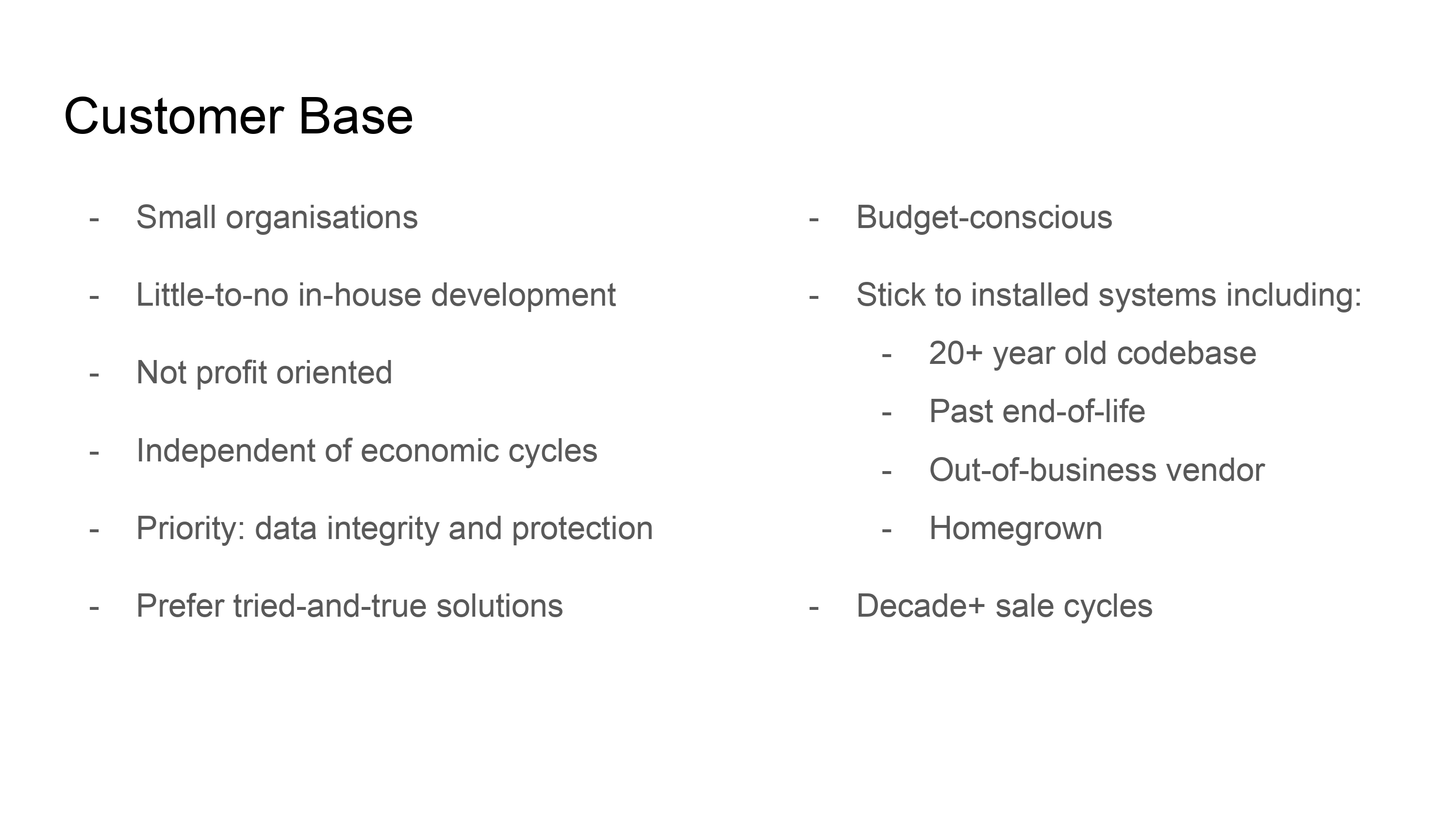
These potential customers have small back offices and little-to-no permanent software maintenance capability. Unlike commercial entities, their decision processes are not focused on profits, and their funding sources are largely not subject to macroeconomic cycles. Furthermore, they value the protection of their internal data and the integrity of their internal processes as nonnegotiable. At the same time, their budgets for technology investments are limited and, thus, they stick to legacy solutions as long as possible. The results are sales cycles that can be measured in decades and are extremely biased towards tried-and-true solutions that have already proved themselves in practice and reputation.
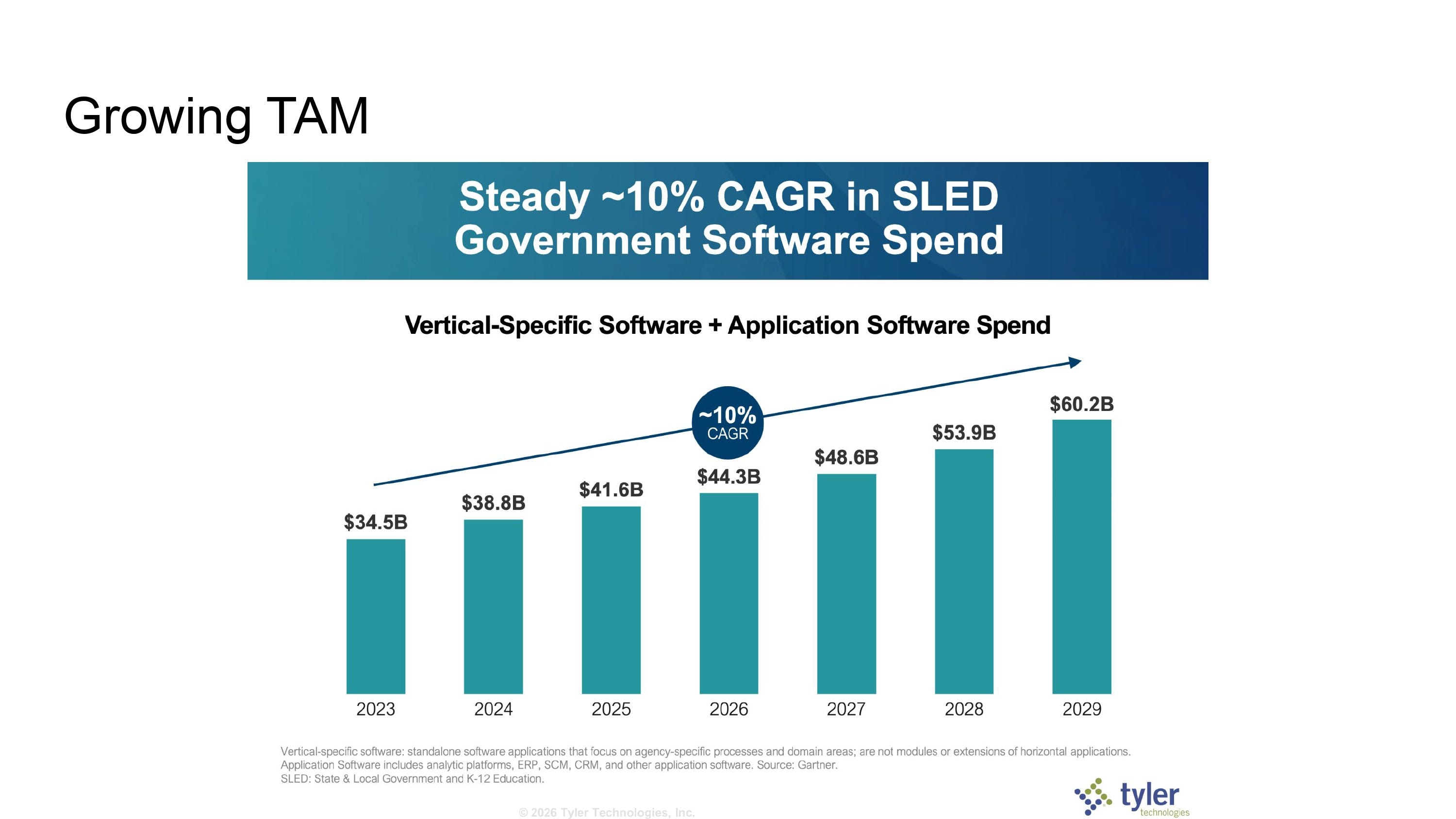
Despite its archaic pace, the overall market is growing steadily.
The investment thesis stands on continuing growth and rising margins.
This thesis is supported by two tailwinds.
The first is simply that Tyler will continue its business as usual. Having painstakingly achieved 11% market share over 28 years as the lone giant in its field, Tyler is arguably at the sweet spot of having built its scale strength with most of its potential consolidation runway still ahead.
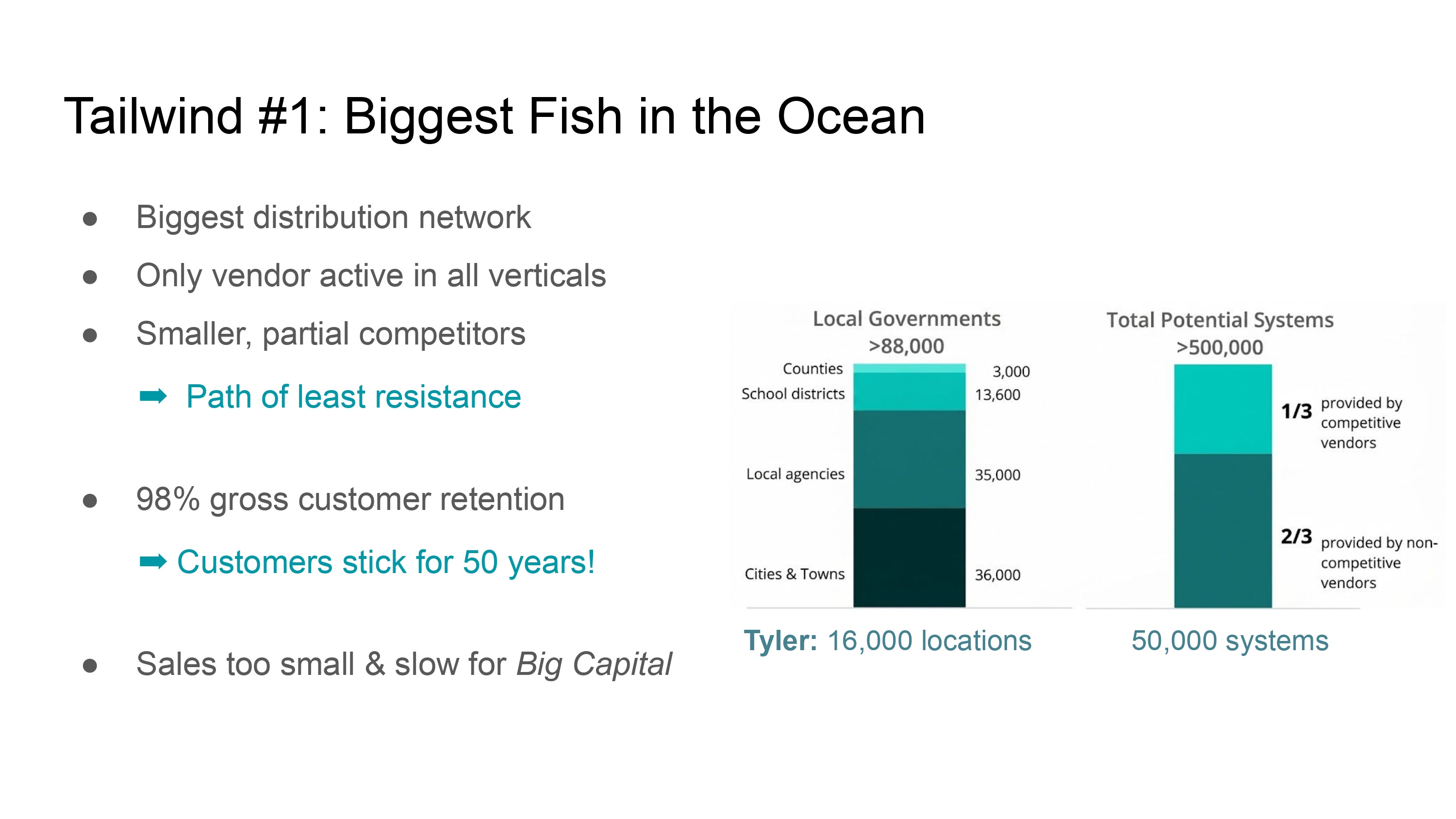
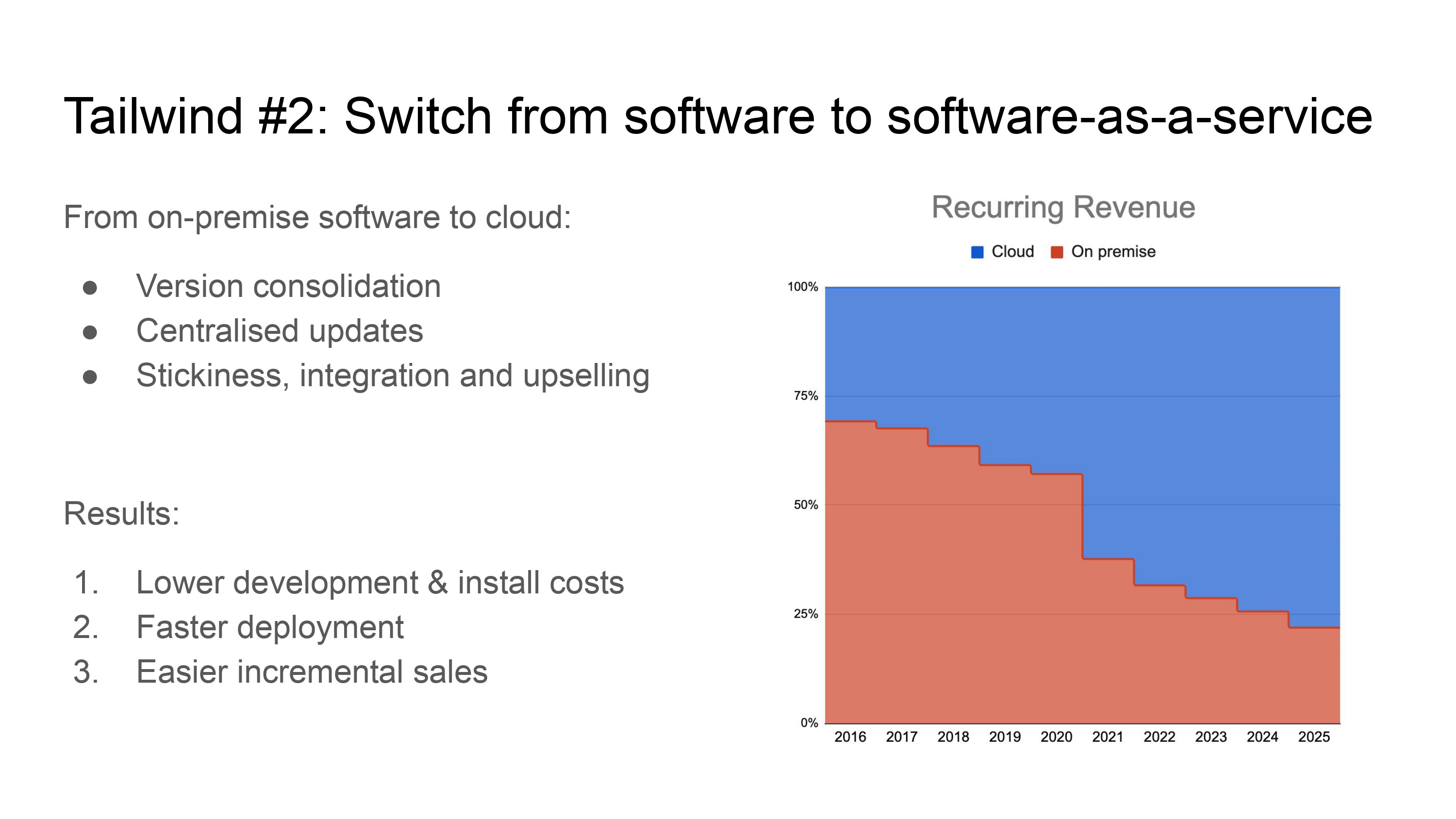
Extremely slow and conservative sales cycles mean that the SLED software market lags today’s commercial software market by multiple decades. Considering Tyler’s unique value proposition and market share, we can deduce that 90% of the market consists of on-premise software. Tyler is leading this market into the software-as-a-service and cloud computing revolutions. This transformation is the engine that is bound to push installations faster, costs lower, cross/up-selling easier and margins higher. Welcome to early 2000s!
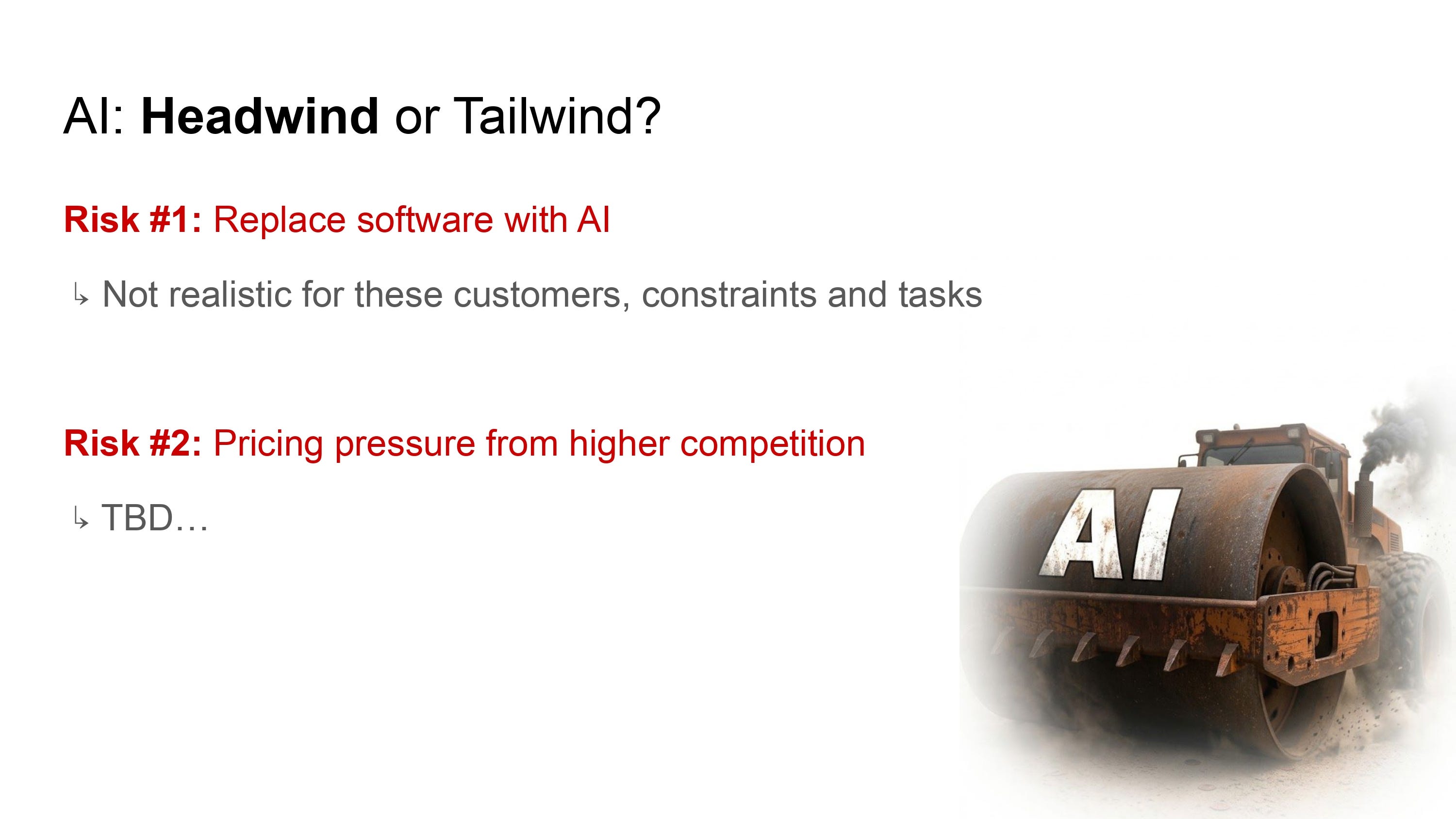
And, finally, we arrive at the big scary topic of AI. Similar to Doug, I see two main ways that AI (in its current marketing definition) can damage Tyler’s terminal value. The all-out replacement by AI seems implausible to me due to the nature of the demand. As for the plausibility of the second, more nuanced scenario of increased competition, my view is simple: I do not and am not qualified to know, not until it becomes obvious with the benefit of hindsight. Thankfully, the external signs of this risk should be clear: Growth of recurring revenues and their margins.
Although not a necessary part of the core thesis, AI can also end up as an additional upside, if two things happen:
AI is used by local governments for internal assistance to aid their workers with their jobs
Tyler’s unified cloud of records positions them as the default AI vendor to handle those records
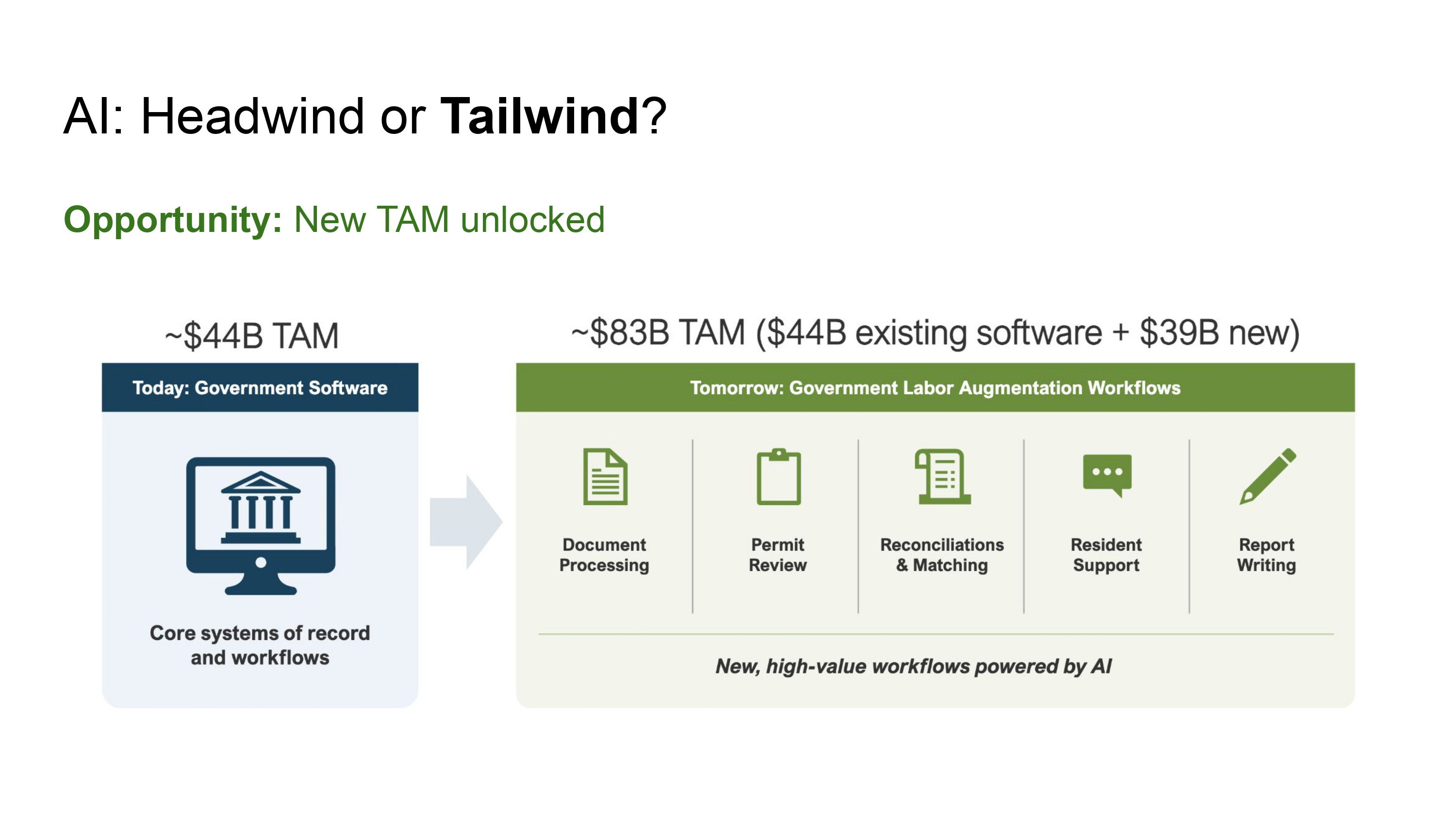
The below quote from one of Tyler’s customers stood out to me. AI solutions could enable Tyler to tap the governmental labor budget.
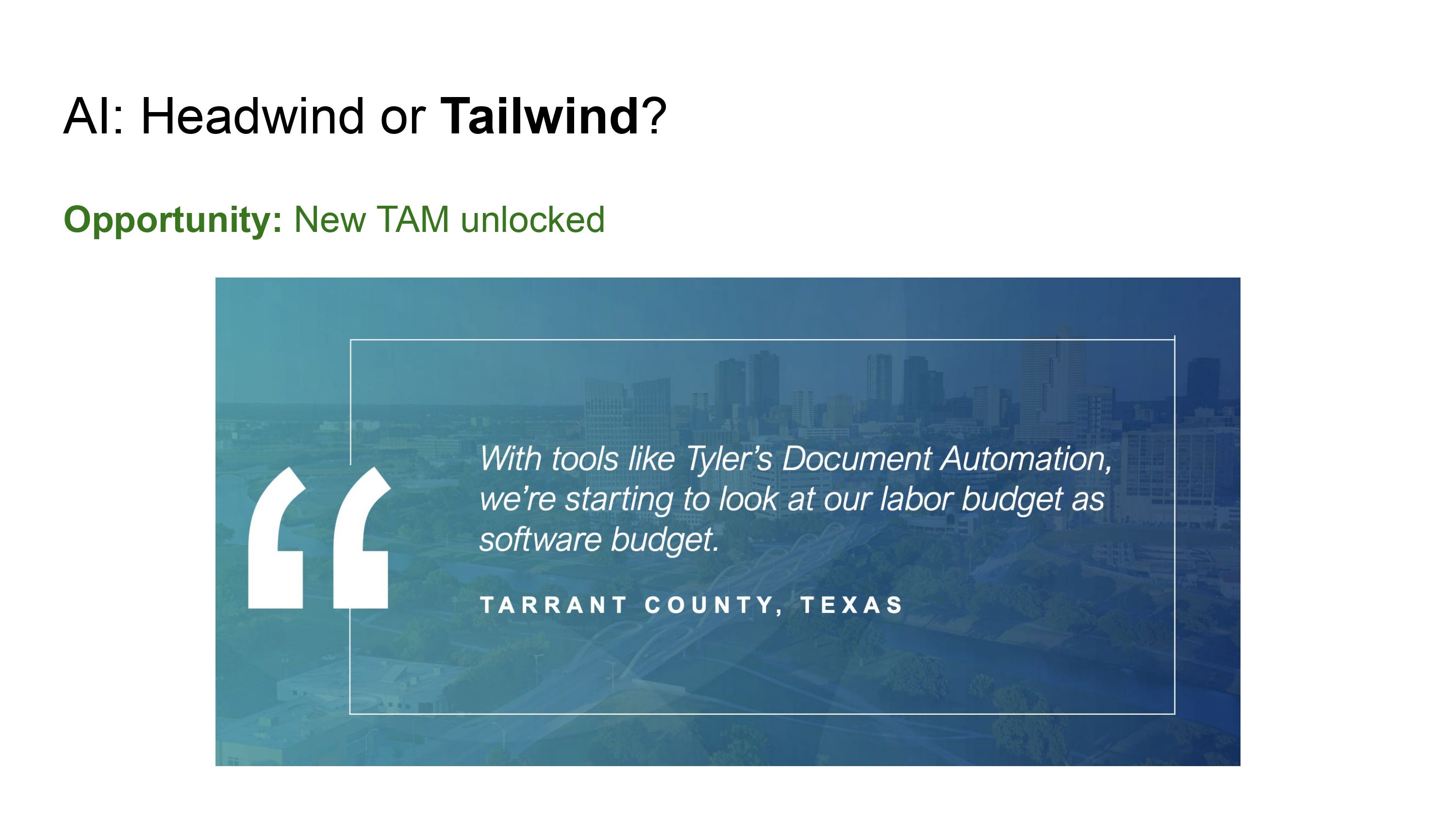
Tyler’s story so far has been one of shifting from the governmental Capex to the Opex. And, you can’t get closer to the core of the public Opex than the salaries of public servants!
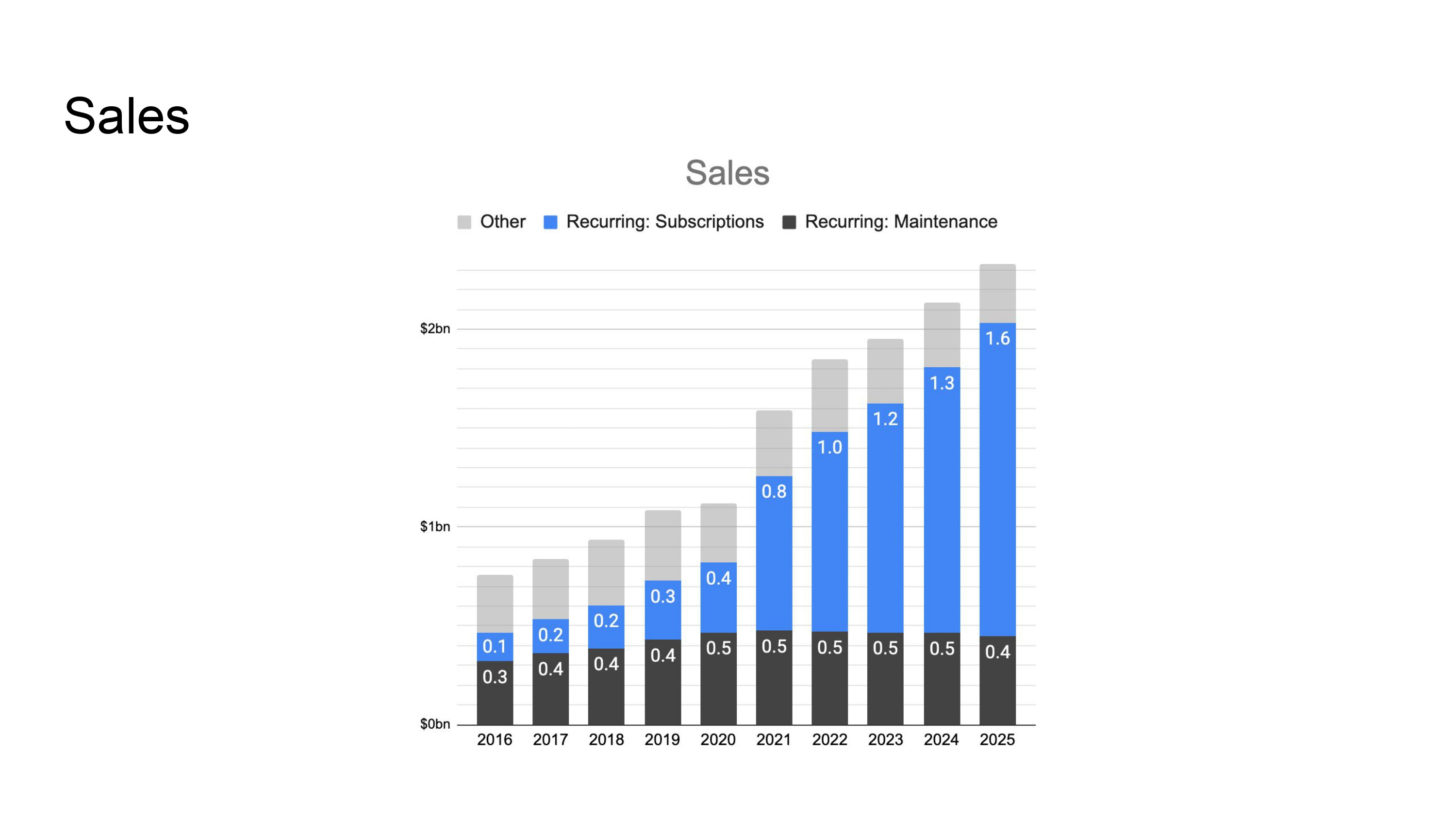
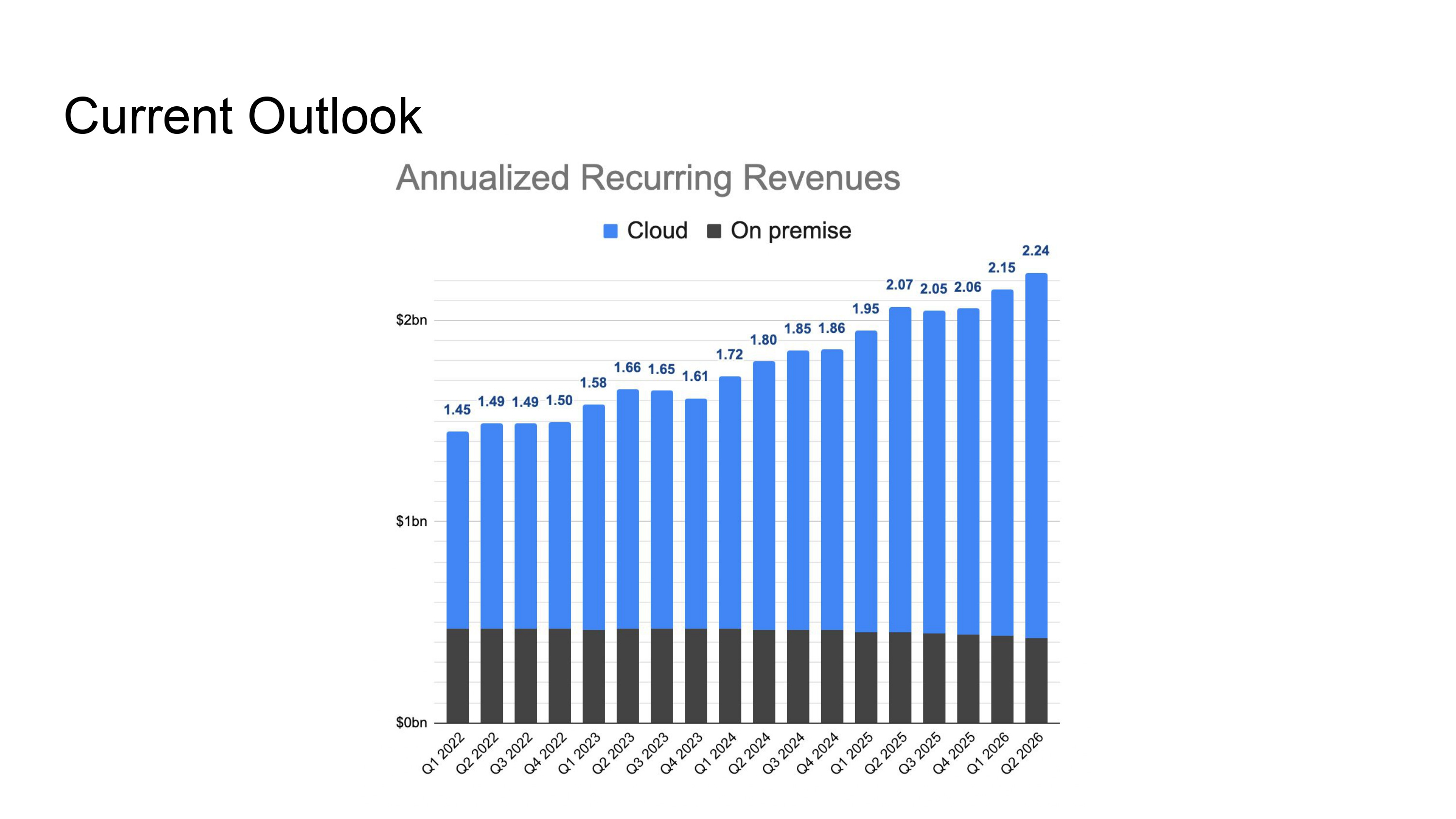
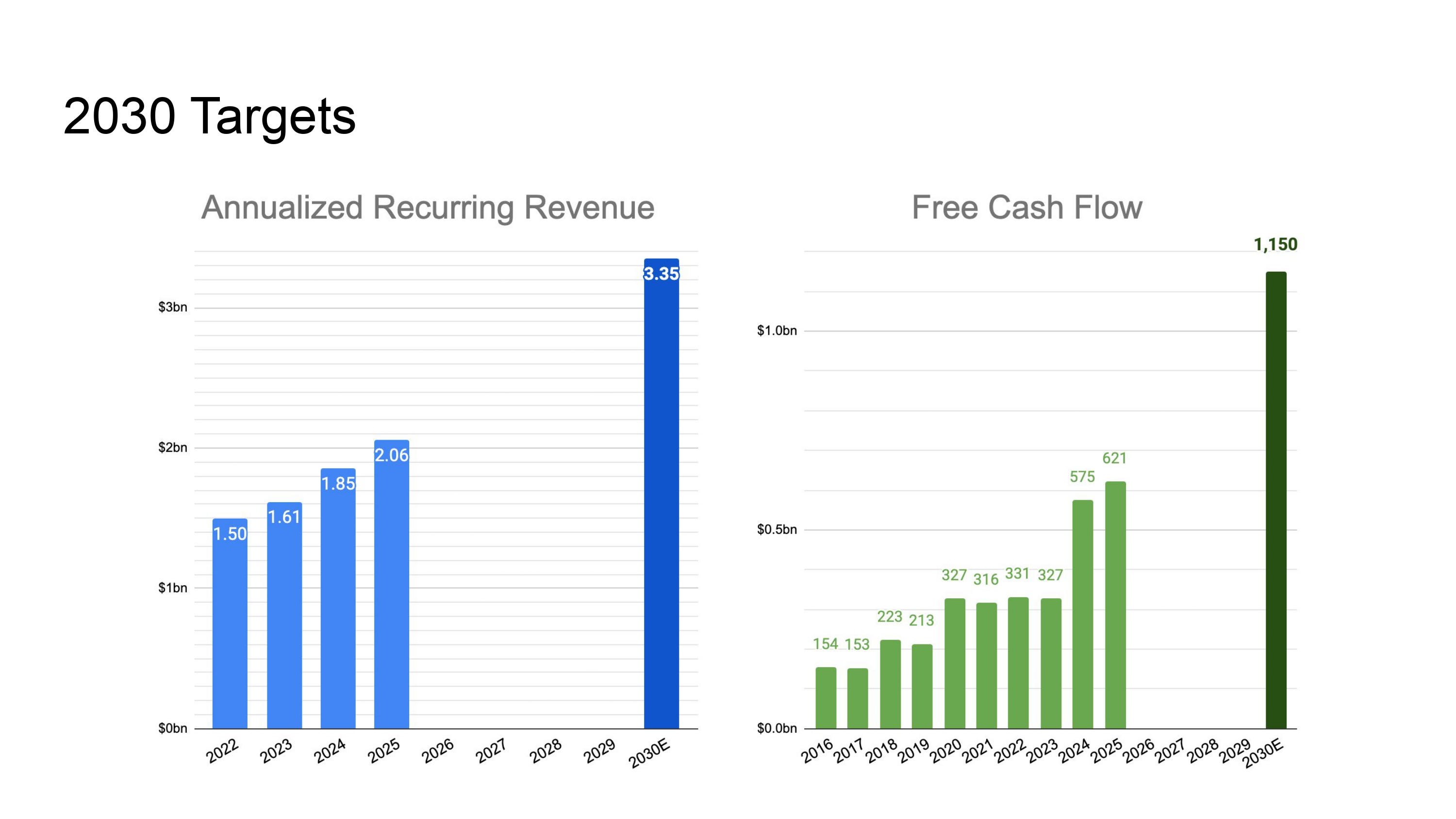
Recurring cloud subscriptions are the engine of Tyler’s current and future growth in recurring profits.
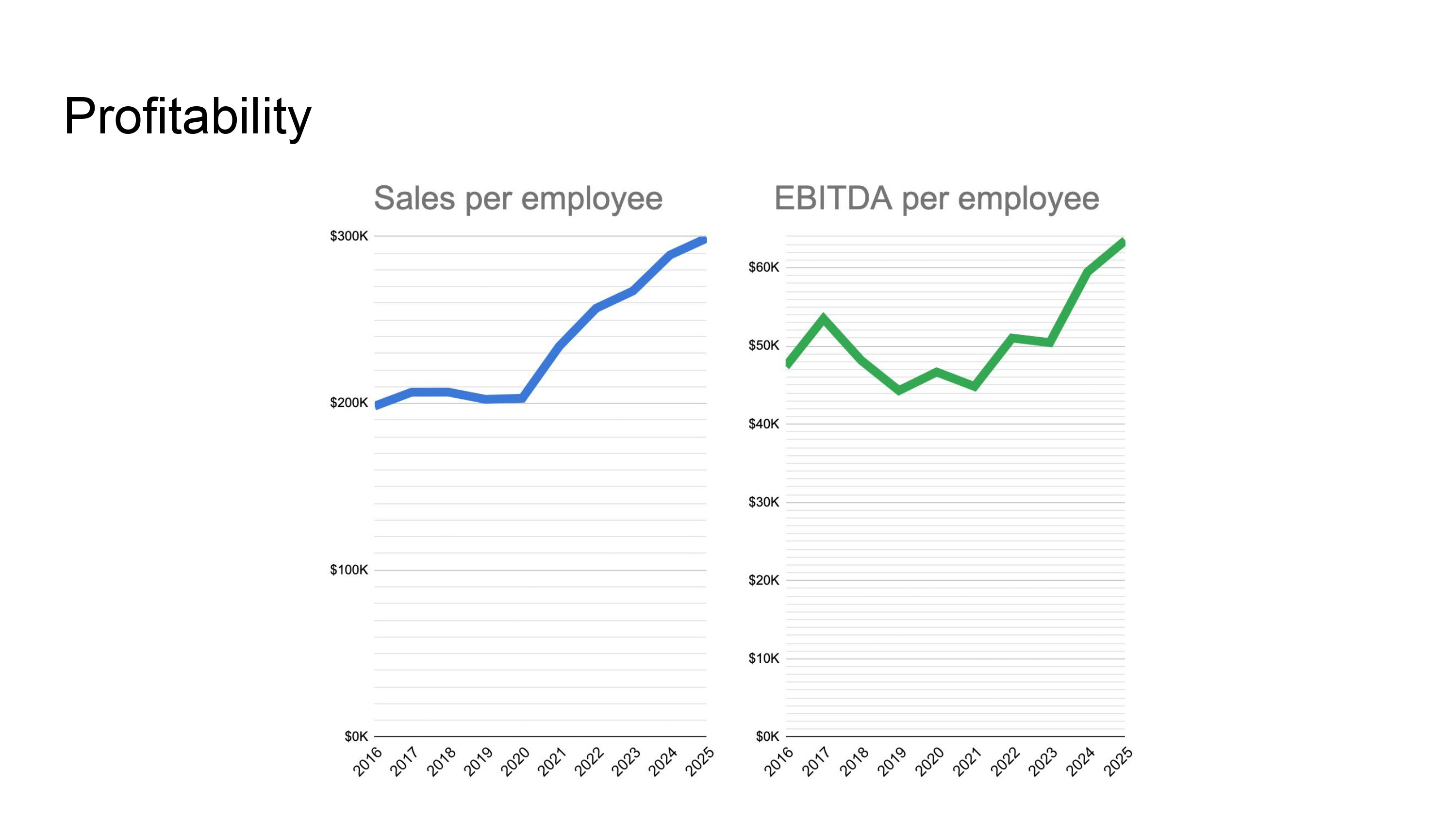
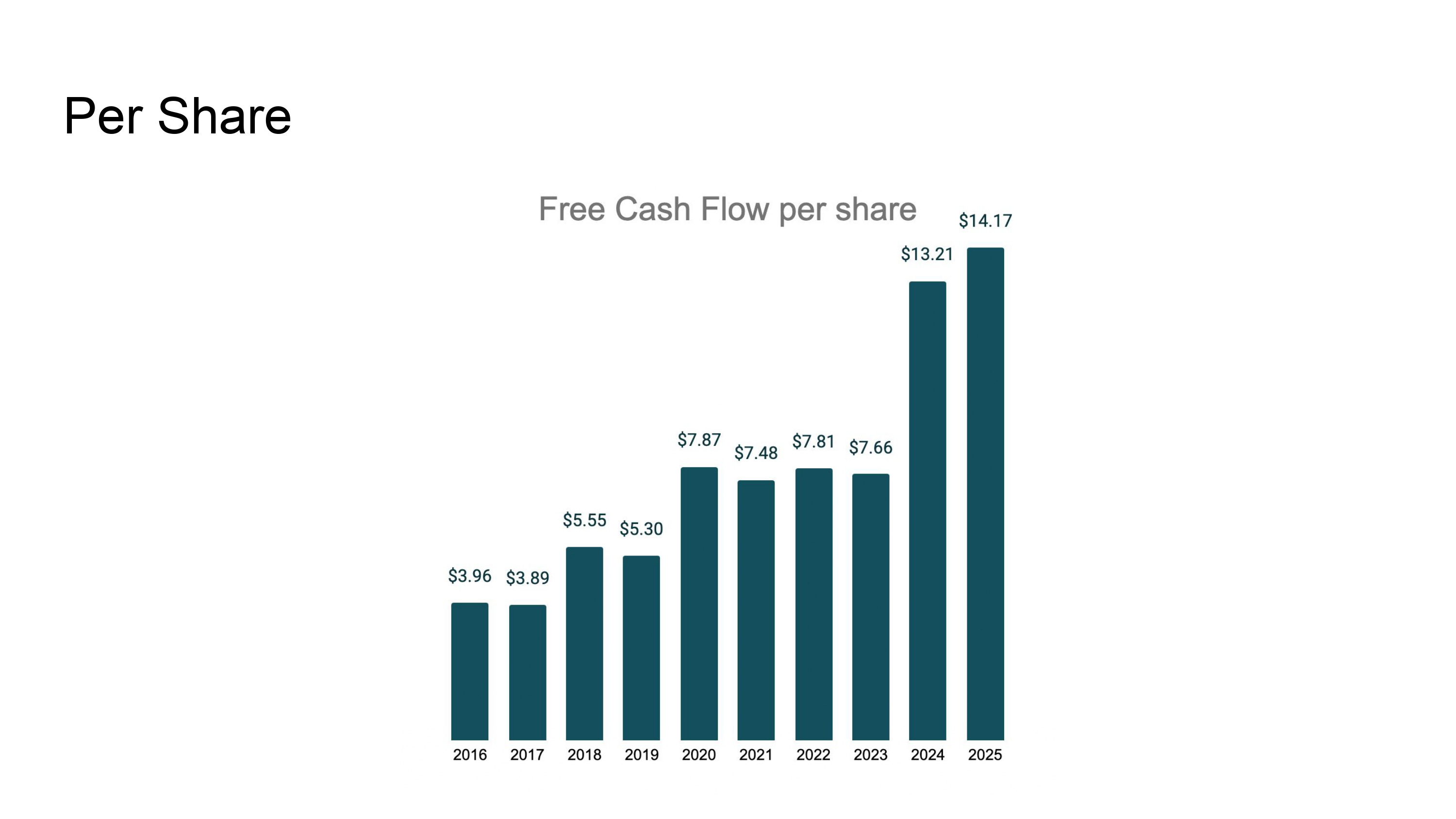
Benefits of the achieved scale and the cloud transformation can also be seen in profits.
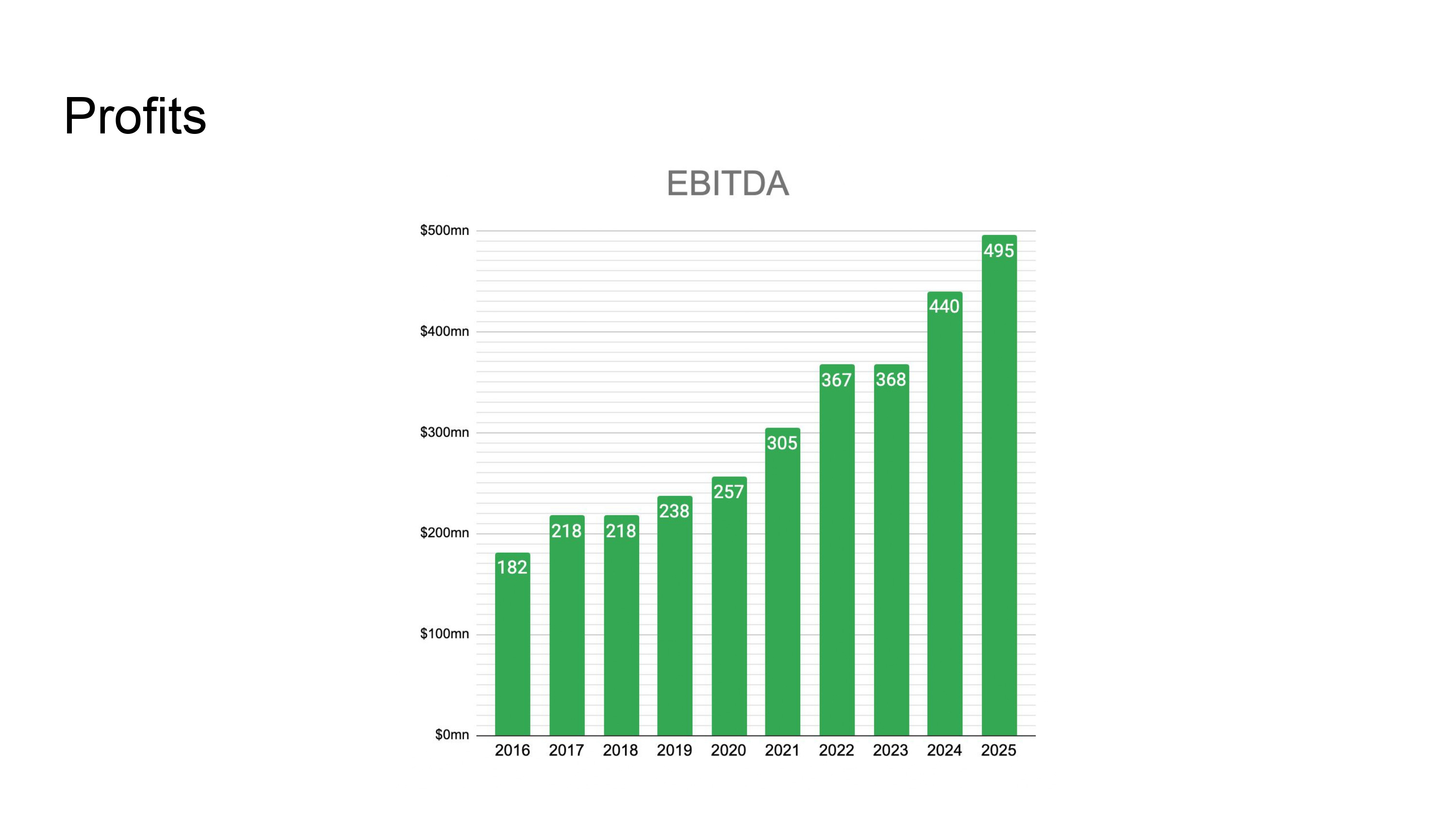
Company’s productivity has been rising despite the double dip of increased investments into building out the cloud platform while maintaining the on-premise support.
The current outlook in the cloud growth looks positive on a quarterly basis, as well.
Management expects the growth to continue steadily for the foreseeable future. AI shows itself as a theoretical upside rather than as a sales cliff.
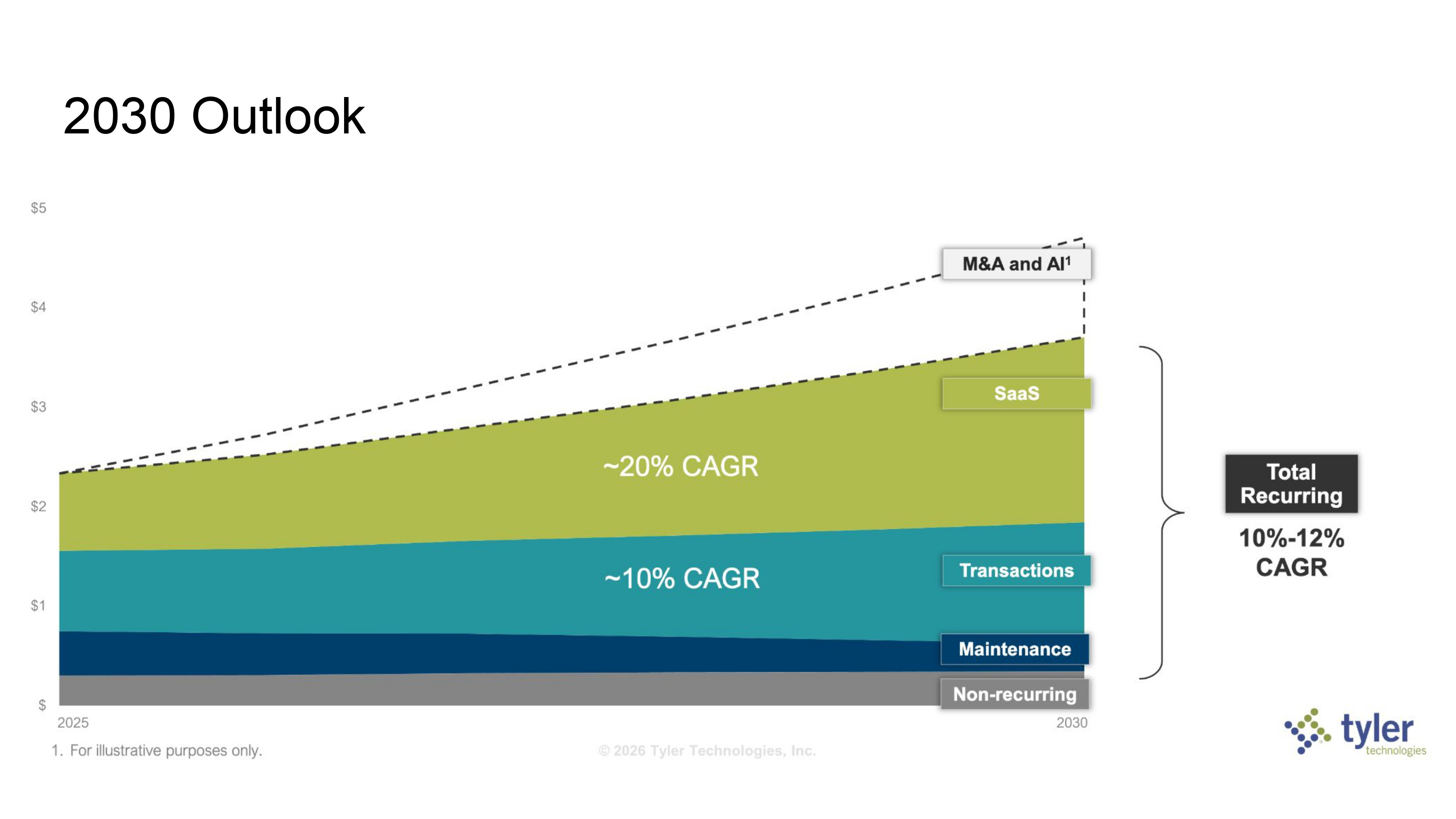
Management expects profits to rise much faster than sales throughout this growth. (Think margin growth from mid-20s% to mid-30s%.) If the expected cloud growth actually takes place, the margin upside should be very realistic. We have already seen the SaaS story materialize in the commercial world a long time ago, after all.
We can not wrap up an overview without a look into the capital allocation.
On the broadest level, Tyler is in the business of investing. No dividend is paid out to shareholders, and all of the surplus cash gets invested in acquiring either vertical software vendors or the shares of Tyler itself. Thus, it is important that the company is not destroying value with capital allocation.
Looking at the last 10 years’ broad picture, a couple of things stand out:
There is significant stock based compensation, and buybacks have merely moderated their dilution.
Company regularly acquires companies, sometimes with debt.
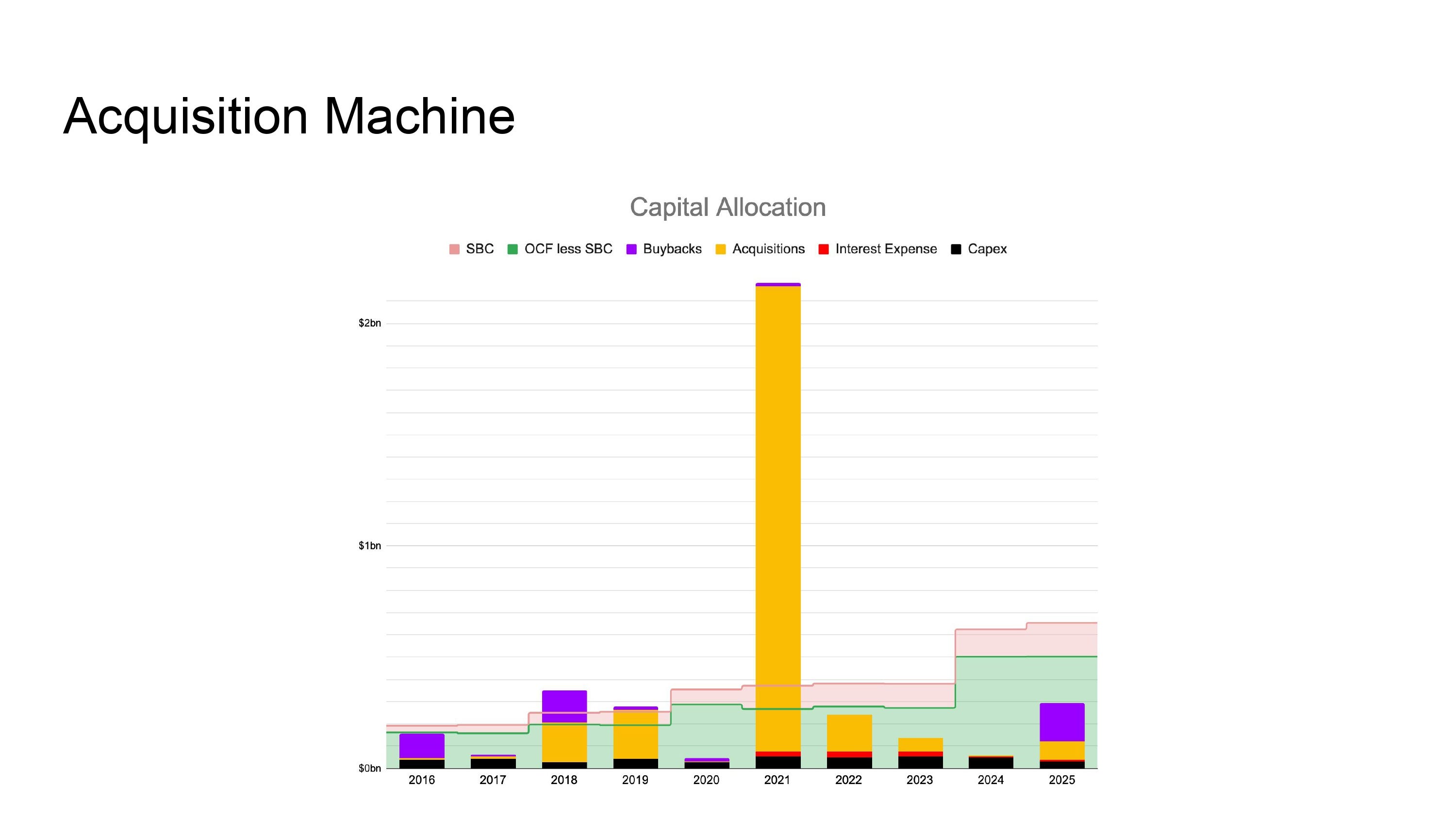
Tyler’s SBC is milder than the most egregious examples in the tech space, yet it is still very large. I personally don’t like it, but find it acceptable as long as shareholders’ upside is well compensated. My conclusion is to disregard management’s SBC-related adjustments on top of EBITDA when measuring the company’s overall profitability.
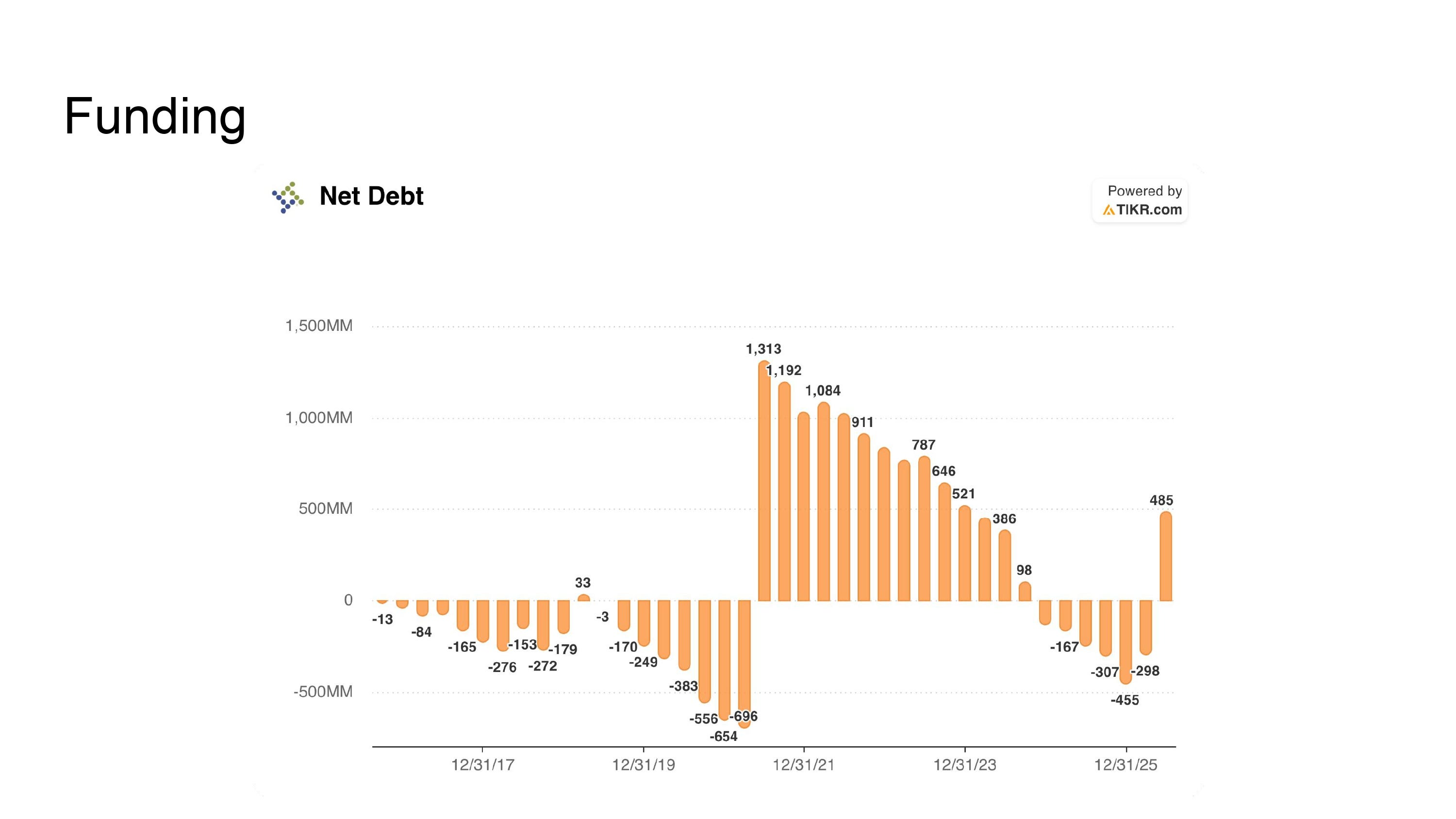
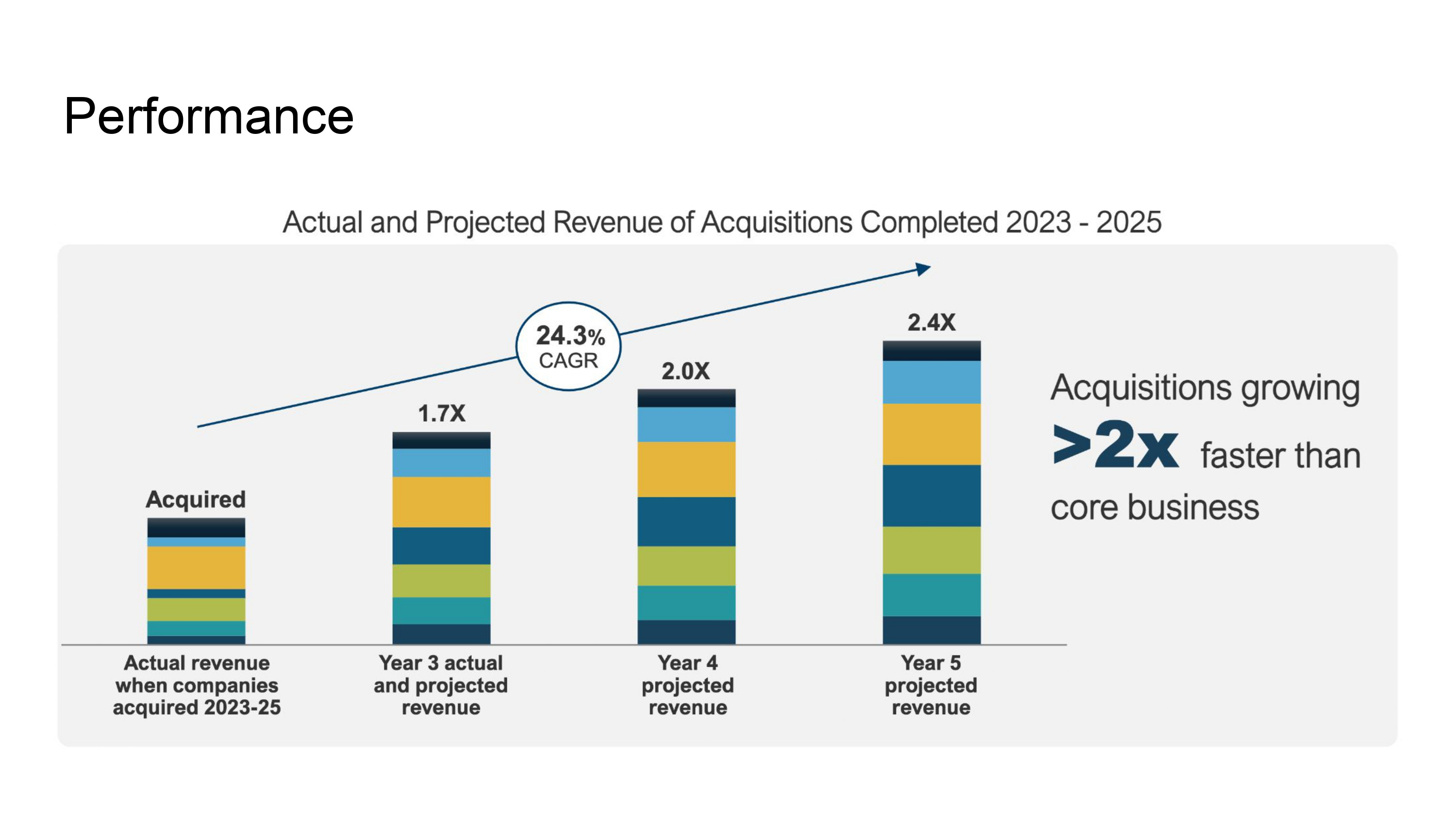
As for acquisitions, two critical facets are that they are funded responsibly and have adequate returns.
Debt for acquisitions seems to be taken on a responsible and temporary basis.
And, the acquired companies seem to perform well and give good returns.
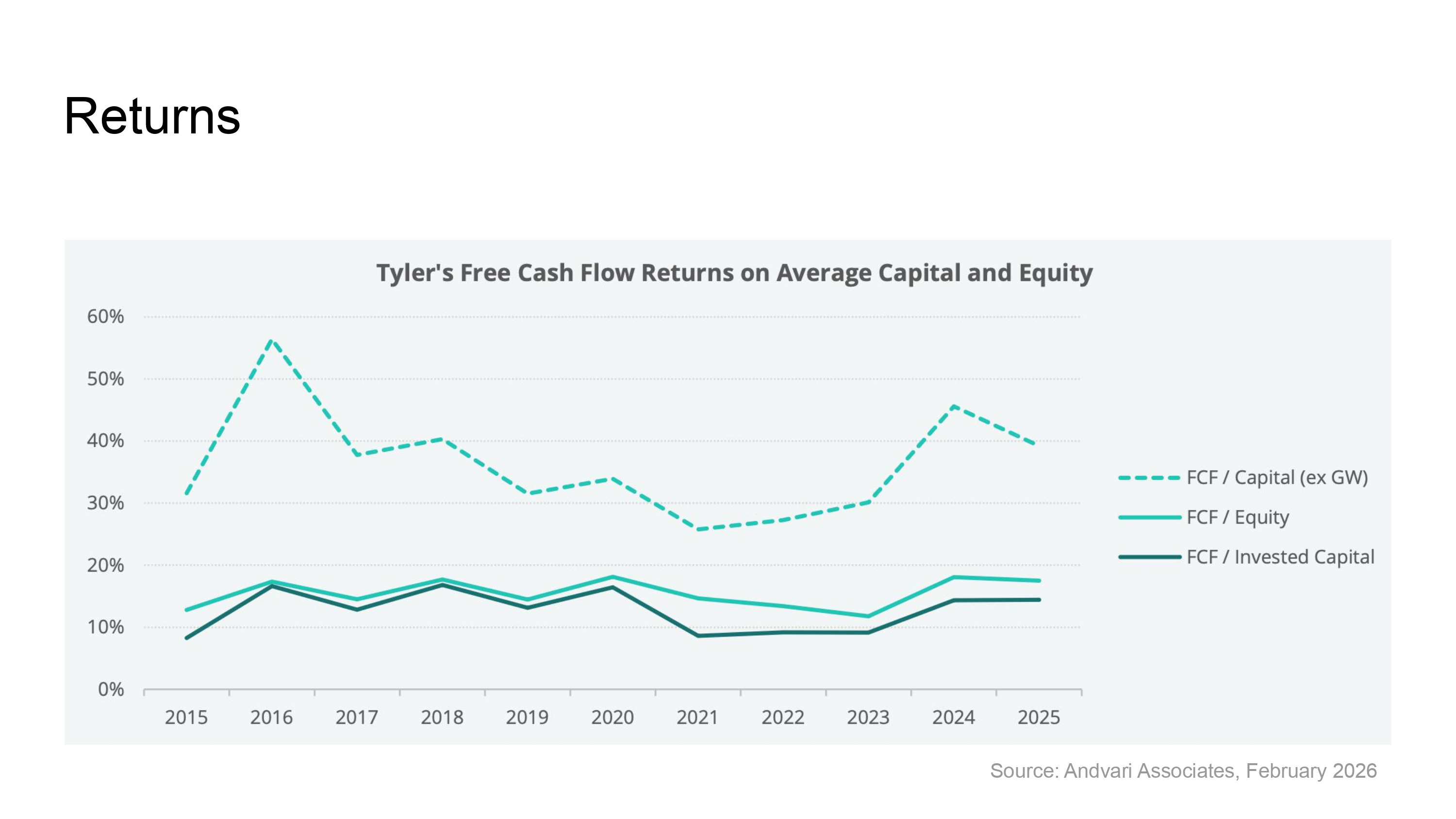
Admittedly, my motivation in checking the capital allocation is to make sure that the generated cash is not obviously wasted rather than possessing a Buffett-like investing acumen. In the end, this thesis rests on operational prospects.
Disclaimer: This is not investment advice. Please read the full disclaimer in the About page.